This challenge is closed
Ophthalmology Innovation Challenge & Pilot Program
We are looking for cutting edge solutions for ophthalmology patients!
The Challenge is closed for submissions. View winner and finalists below.
Partners



In collaboration with


Roche, Start-Up Nation Central & Beilinson Hospital share a common vision of providing enhanced digital health solutions that will significantly improve retina patients’ lives and support their caregivers by enabling monitoring, enhancing patient support, and optimizing screening & diagnosis.
The Roche for a Better Future Ophthalmology Innovation Challenge & Pilot Program is a groundbreaking platform that will enable you to conduct a real-life pilot in Beilinson Hospital to test your solution. You will enjoy full support, including access to a multidisciplinary team of leading experts that will assess your solution, a comprehensive mentorship package, a fast-track for submission to the Helsinki Committee and global exposure.
The Winner

Winner

Notal Vision is a commercial stage patient-centric digital healthcare provider of remote monitoring services that extends age-related macular degeneration (AMD) monitoring from the clinic to the home, providing eye care professionals with remote diagnostic tools to support their patient care. With a proven approach to home-based, self-operated diagnostics, AI-enabled data analysis, and patient engagement services, Notal Vision helps to preserve patients’ vision long-term. The Home OCT pipeline platform developed at the company’s Tel Aviv Technology Center will support personalized treatment by monitoring disease activity and treatment response remotely, reducing office visits burden on patients and caregivers and promoting therapy adherence.
The Finalists

AEYE Health is a venture-backed digital health startup that develops AI algorithms for autonomous interpretation of fundus images for various ocular and systemic conditions. Its flagship product, AEYE DS, is an FDA-cleared algorithm for the diagnosis of diabetic retinopathy.
Its products put the power of retinal screenings in the hands of primary care physicians, enabling early detection for the prevention of vision-threatening complications.

BioT Medical, a leader in cloud-powered medical devices, has partnered with Zilia, a medical technology company specializing in non-invasive ocular biomarker measurement. This strategic alliance combines BioT’s expertise in connecting devices with healthcare systems and Zilia’s advanced ocular oximetry technology. Aimed at revolutionizing retinal disease management and patient care, the partnership focuses on early detection, personalized treatment, and continuous monitoring. By integrating spectroscopy, imaging, artificial intelligence, and seamless data communication, this collaboration seeks to enhance healthcare delivery, making it more efficient, accessible, and tailored to individual needs in the field of ophthalmology.

GistMD is an AI-based patient education and engagement platform that empowers patients and drives adherence along their care journey. By providing personalized content and behavioral change tools, GistMD achieves patient activation that leads to improved health outcomes. Personalization includes language, gender, age, culture, medical background, medication, behavioral factors and more. GistMD is deployed in numerous healthcare centers and hospitals, showing evidence-based results in improved adherence, operational efficiency, reduced staff burnout and patient satisfaction.

The CASMIP Laboratory at the School of Computer Science and Engineering, the Hebrew University of Jerusalem, and the Hadassah University Medical Center have jointly developed a novel AI-based solution for the accurate diagnosis of Inherited Retinal Dystrophies based on optical images. The solution, based on novel methods for deep-learning image processing, will assist in the early diagnosis of patients and in screening prior to genetic testing. It will also support diagnosis in locations where genetic testing is unavailable or not routinely performed. The technology holds promise for the diagnosis of other types of retinal diseases.

XOLTAR develops AI companions that emulate the one-on-one interactions nurses have with patients, guiding individuals in maintaining the healthy habits necessary to manage their medical conditions. XOLTAR implements evidence-based protocols through free-guided conversations conducted over telehealth calls. These conversations are truthful, grounded and aligned, yet provide a seamless and free-flowing patient experience. This staff-augmentation solution enhances support teams with AI companions capable of acting as co-pilots. They replicate support protocols, connect to the CRM and extend the support staff, while generating insights from video data at unlimited scale with 24/7 accessibility.
What Will You Gain From The Program?
Access and exposure to a network of Roche global experts
A special session with the Israel Innovation Authority
Investment opportunities for your company - the program will be widely globally communicated and promoted by Startup Nation Central
The Winner will implement a one-of-a-kind real-life pilot in Beilinson Hospital, with a fast track for submission to Helsinki Committee
Pilot funding - up to 200,000 NIS
(VAT included, subject to the program’s Official Rules)
50,000 NIS for pilot preparation
Up to 150,000 NIS for conducting a pilot at the Retina Unit, Beilinson Hospital
Comprehensive mentorship package
3 mentorship hours with a medical expert from the Retina Unit, Beilinson Hospital
3 additional mentorship hours with experts from Beilinson Hospital, including a fast track for submission to the Helsinki Committee
3 mentorship hours with Dr. Irit Yaniv, Co-founder and CEO, Almeda Ventures
The Challenge
Roche for a Better Future seeks innovative digital health solutions for Ophthalmology patients with retinal diseases (AMD, DME, DR & RVO), aiming to enhance support for patients and caregivers.
Areas of focus:
For example: Remote monitoring of visual acuity or OCT in retinal patients; insights generation - analyzing patient data (text and imaging) to predict progression of retinal diseases.
For example: Disease management optimization, patient adherence to treatment regimen and patient awareness.
For example: Screening patients with high risk for retinal diseases and diagnosis of retinal diseases.
Additional Considerations
Timeline of the Challenge
Advisory Committee
Prof. Rita Ehrlich
Hagit Hendel
Prof. Anat Loewenstein
Prof. Itay Chowers

Prof. Sascha Fauser

Neta Gruber Perry
Dr. Irit Yaniv

Prof. Ran Gilad-Bachrach
Prof. Rita Ehrlich
Prof. Rita Ehrlich
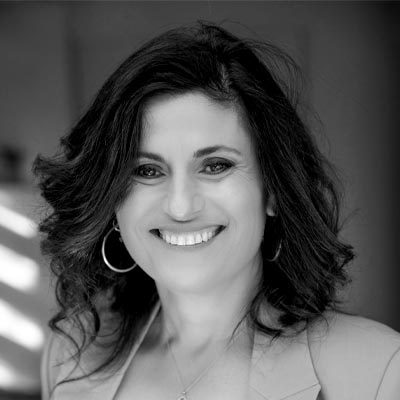
Prof. Ehrlich is professor of ophthalmology at the faculty of medicine at Tel Aviv university and is head of ophthalmology at the faculty of medicine at Tel Aviv university. She is the director of the retina service at Rabin Medical center.
She is a member of the Israeli Ophthalmological Society committee and head of ophthalmology of IMA’s Online School for the Medical Professions. She performed a 2 year clinical research fellowship on retinal blood flow at Indiana university and a 2 year of vitreoretinal fellowship at Auckland, New Zealand. She leads the pediatric retina clinic at Schneider children’s medical center.
Her research focuses on clinical research both in the field of medical as well as surgical retina. She is PI in multi center studies performed at Rabin medical center in the retina field.
Hagit Hendel
Hagit Hendel
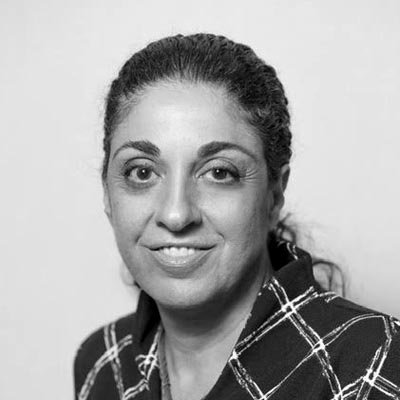
Hagit is the Chief Innovation Officer of Rabin Medical Center, one of Israel’s largest hospitals. She is a member of the Rabin Medical Center Management team, responsible for digital transformation, innovation, planning and execution of IT projects. She is the head of project MANOR, overseeing the transition of all Clalit Health hospitals to the latest SAP ISH modules. Led the development of a new innovative real-time departmental patients dash-board called ELMA – system is fully implemented and operational; won multiple awards and accolades. She is actively leading collaboration around groundbreaking medical innovation between Rabin Medical Center and companies like Intuitive Surgery, Intel, IBM, Zebra, AIDOC and several others, and led Rabin Medical Center and Microsoft joint team to winning first place at the Microsoft Israel Hackathon – the team demonstrated innovative approaches for preventing elderly people from falling and consequent injuries.
Prof. Anat Loewenstein
Prof. Anat Loewenstein
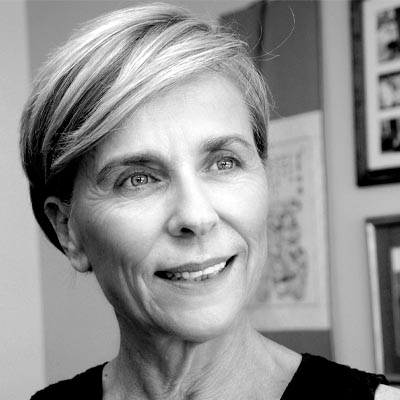
Prof. Loewenstein is a professor of Ophthalmology, Chairman of the Division of Ophthalmology at the Tel Aviv Medical Center, Sidney Fox Chair of Ophthalmology at the Sackler Faculty of Medicine at Tel Aviv University, President of the Israeli Ophthalmological Society and the President Elect of the Euretina board. Her main field of interest is the investigation of drug administration and toxicity to the retina, early detection of macular degeneration and home monitoring of retinal disease. She has been leading several cutting edge technologies implemented in large scale clinical trials and in clinical setting
Prof. Loewenstein published more than 450 papers in peer reviewed journals, and contributed multiple chapters to ophthalmology textbooks. She serves as the Editor in Chief of the Journal Case Reports in Ophthalmology, is an associate editor of Investigative Ophthalmology & Visual Science Journal, European Journal of Ophthalmology and of Ophthalmologica.
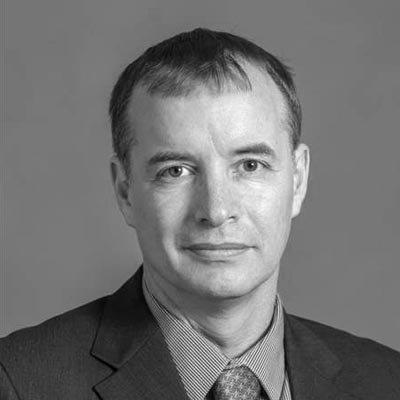
Prof. Itay Chowers
Prof. Itay Chowers
Professor Chowers serves as the Chairman of the Department of Ophthalmology at the Hadassah Medical Center and holds the Jonas Friedenwald Chair in Ophthalmological Research at the Hebrew University of Jerusalem. He is a retina specialist, dedicated clinician-researcher, and leads a research laboratory and an Ophthalmic clinical research center. Professor Chowers has earned a place as a member of the Israeli National Academy for Science in Medicine and the 8400 Health Network. He has also held leadership roles in professional organizations, including past chairmanship of the Israeli Society for Vision and Eye Research (ISVER) and the Israeli Retina Society. Additionally, he serves as an integral member of the Executive Committee of the International AMD Genomic Consortium (IAMDGC), contributes to the research committee of the Macula Society, and participates in the review board for the Bright Focus AMD program. Professor Chowers’ primary research focus revolves around retinal diseases, with a particular emphasis on age-related macular degeneration (AMD). His investigations delve into the underlying mechanisms of AMD, aiming to uncover innovative biomarkers and therapeutic approaches for both the atrophic and neovascular forms of the condition. To achieve these goals, he employs a multidisciplinary approach that encompasses genetics, cell biology, and cutting-edge computational methodologies, including artificial intelligence-based analysis of omics data, imaging, and clinical information. His research endeavors are supported by numerous competitive grants and fruitful collaborations with industry. Professor Chowers co-authored over 140 peer-reviewed manuscripts. Furthermore, his work has led to the establishment of three start-up companies, all stemming from the insights gained through his research pursuits.
Prof. Sascha Fauser
Prof. Sascha Fauser
Sascha is the Vice President and Global Head of Ophthalmology, pRED, Roche. He joined Roche in 2016 as the Head of the pRED Ophthalmology group. Prior to joining Roche, Sascha worked as a Professor of Ophthalmology (vitreoretinal surgery) at the University Hospital of Cologne, Germany. As a physician-scientist with more than 20 years of experience in clinical ophthalmology and more than 25 years in basic retinal research, he has extensive knowledge of clinical and research leadership with the acquisition of major grants. Sascha earned his doctorate at the University of Tübingen and completed an ophthalmology residency, as well as fellowships in surgical and medical retina, at the University Hospital of Cologne, Germany.
Neta Gruber Perry
Neta Gruber Perry
Neta Gruber Perry is Head of Health-tech & Europe Desk Director at the International Collaboration Division of the Israel Innovation Authority, where she creates and leads collaboration opportunities for Israeli startups with a variety of international partners, with a special focus on Health-tech and Climate-tech. Neta has diverse experience in the fields of innovation, research, business development and social entrepreneurship, spanning private, public and non-profit sectors. She holds a BA (Honors) in Amirim Interdisciplinary Excellence Program and International Relations from the Hebrew University of Jerusalem, a Master of Public Policy from the University of Oxford and is a graduate of the Harvard Kennedy School Executive Program.
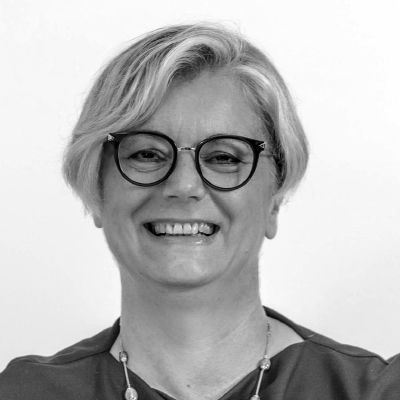
Dr. Irit Yaniv
Dr. Irit Yaniv
Dr. Yaniv is Co-founder and CEO, Almeda ventures, the first HealthTech focused public R&D partnership.
As a senior manager, skilled physician, and experienced board member, she possesses a highly developed combination of leadership, decision making and business skills. She served as an Executive Director and Chairperson of Accelmed’s Innovation Hub portfolio companies. She is a co-founder of We@healthtech, a program aiming to propel junior women managers to executive positions in the health tech sector by mentoring them and putting them through an eight-month program of lectures and networking events.
Prof. Ran Gilad-Bachrach
Prof. Ran Gilad-Bachrach
Professor of Bio-Medical Engineering, Head of Digital Sciences for Hi-Tech,Tel-Aviv University
Prof. Ran Gilad-Bachrach leads the MLwell lab, in the Bio-Medical Engineering Department at Tel-Aviv University. The lab studies machine learning and its applications for health and wellbeing. Ran is the head of the Digital Sciences for Hi-Tech program at Tel-Aviv University, a member of the steering committee of Clinical Bioinformatics Program at the Safra Center, and a member of Sagol Brain Research Center. Ran earned his Ph.D. from the Hebrew University of Jerusalem. Ran was a researcher at Intel Research, Bing, and Microsoft Research. In 2019 Ran Joined Tel-Aviv University as an Associate Professor. Ran published over 40 papers in the leading venues of machine learning and AI. Among his contributions are machine-learning algorithms that preserve privacy, algorithms for parallel training, algorithms for learning on graphs and sets, methods for using AI to help people cope with mental stress, and many additional contributions.
About Retinal Diseases
Retinal diseases are a major cause of visual impairment and blindness, especially among older individuals and diabetic patients. The prevalence of these diseases is increasing due to aging populations and the global rise in diabetes. There is a growing need for better treatments and enhanced digital health solutions to support patients in preserving their vision so that they can witness the most precious moments in life with their loved ones.
Digital health may offer promising solutions to reduce clinic visits, improve treatment adherence, enable personalized care and optimize the management of retinal diseases, leading to better patient outcomes, reduced healthcare burden and enhanced well being.
Partners
In Collaboration with